Botswana’s airports for safari travellers.
- Maun (MUB): the gateway to the Okavango Delta, Moremi, Khwai, Linyanti and the Kalahari. Most Delta safaris start and end here.
- Kasane (BBK): the gateway to the Chobe riverfront, a short drive from the Kazungula border and the Victoria Falls.
- Gaborone (GBE): the capital’s airport, in the south-east. Useful for business travel and some regional connections, but a long way from the main safari areas.
- Victoria Falls (VFA) in Zimbabwe and Livingstone (LVI) in Zambia: both about an hour or so by road from Kasane, including the border, and a popular way to begin or end a Chobe safari.
Routes from the UK, Europe, the US and elsewhere.
The most common routing is an overnight flight to Johannesburg (JNB), then a regional flight of around 1 hour 40 minutes to Maun or Kasane. Overnight flights from London, several European hubs and the US land in Johannesburg in the morning, in time for the midday connections.
Other options include connecting through Cape Town, which has had seasonal direct flights to Maun, flying into the Victoria Falls via a Gulf or African hub and transferring by road to Kasane, or connecting through Windhoek if Namibia is part of your route. Schedules change by season, so we check the current options for your dates.
From Kenya and East Africa, connections typically run through Johannesburg, or to the Victoria Falls or Livingstone. Remember the yellow fever certificate if you are arriving from East Africa: see our visa and entry guide.
Timing your flights: the overnight you can avoid.
Light aircraft do not fly into bush airstrips after dark, so the last transfers to camp leave Maun and Kasane in the mid to late afternoon. If your regional flight lands after that, you spend a night in town before flying in the next morning.
That night is avoidable more often than not. Choose an overnight long-haul flight landing in Johannesburg early in the morning, allow at least two to three hours to connect (you collect bags and clear immigration there), and you can usually be in camp in time for an afternoon game drive. On the way home, leave camp in the morning and fly out of Johannesburg in the evening.
Book international and regional flights on one ticket where possible, so a delay on the first leg is the airline’s problem rather than yours.
Light-aircraft transfers between camps.
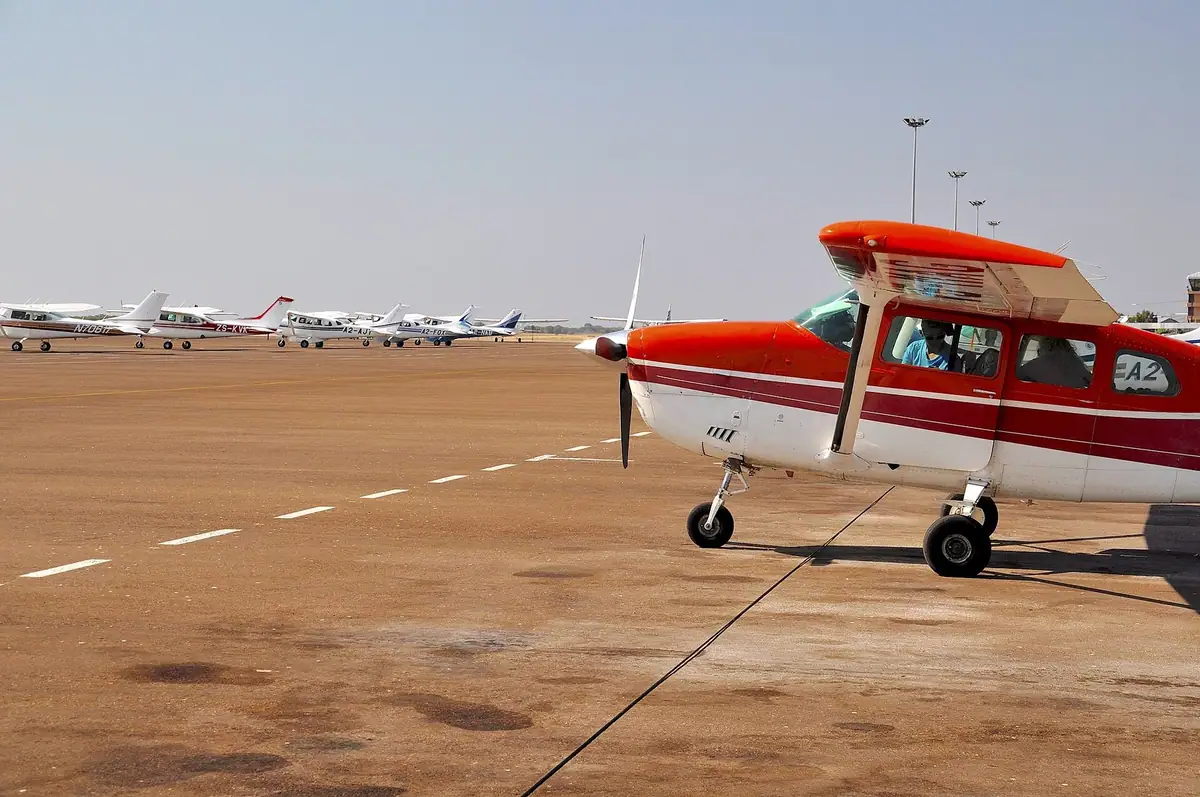
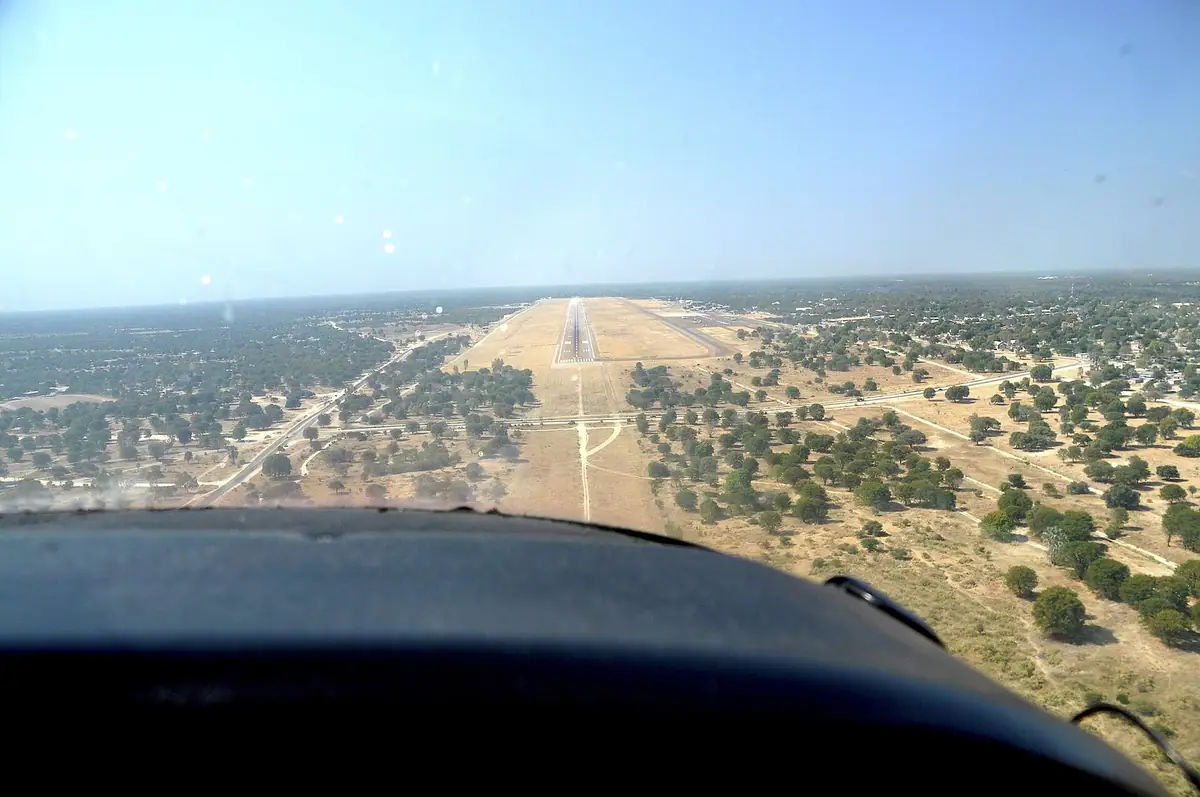
In the Okavango Delta, Linyanti and Savuti, camps are connected by small aircraft, usually six- to twelve-seaters, landing on gravel or grass airstrips close to camp. Flights are short, often 20 to 45 minutes, and the view of the Delta from a few hundred metres up is, for many guests, one of the highlights of the trip.
- Flights are usually shared “seat-in-plane” services and can stop at other airstrips on the way. Private charters are available.
- The luggage limit is around 20kg per person in a soft bag; see our packing guide.
- Small aircraft can be bumpy in the afternoon heat. If you are prone to motion sickness, take something before the flight and ask for a seat at the front.
- Schedules are set the day before and can shift by an hour or so. The camp will tell you when to be ready.
Road transfers, boats and self-driving.
Some areas are reached by road: Khwai and Moremi from Maun, the Chobe riverfront from Kasane, and the Makgadikgadi and Nxai Pan along the main road between Maun and Nata. Mobile safaris in our Kalahari Collection travel overland in safari vehicles, which is part of their character. In the Delta, boats and mokoro are used to reach some water camps.
Self-driving is possible but serious: deep sand, river crossings, few fuel stops and animals on the roads, especially at night. Botswana drives on the left. Most of our guests prefer to leave the driving to a guide and spend the time looking.