The luggage rule that shapes everything else.
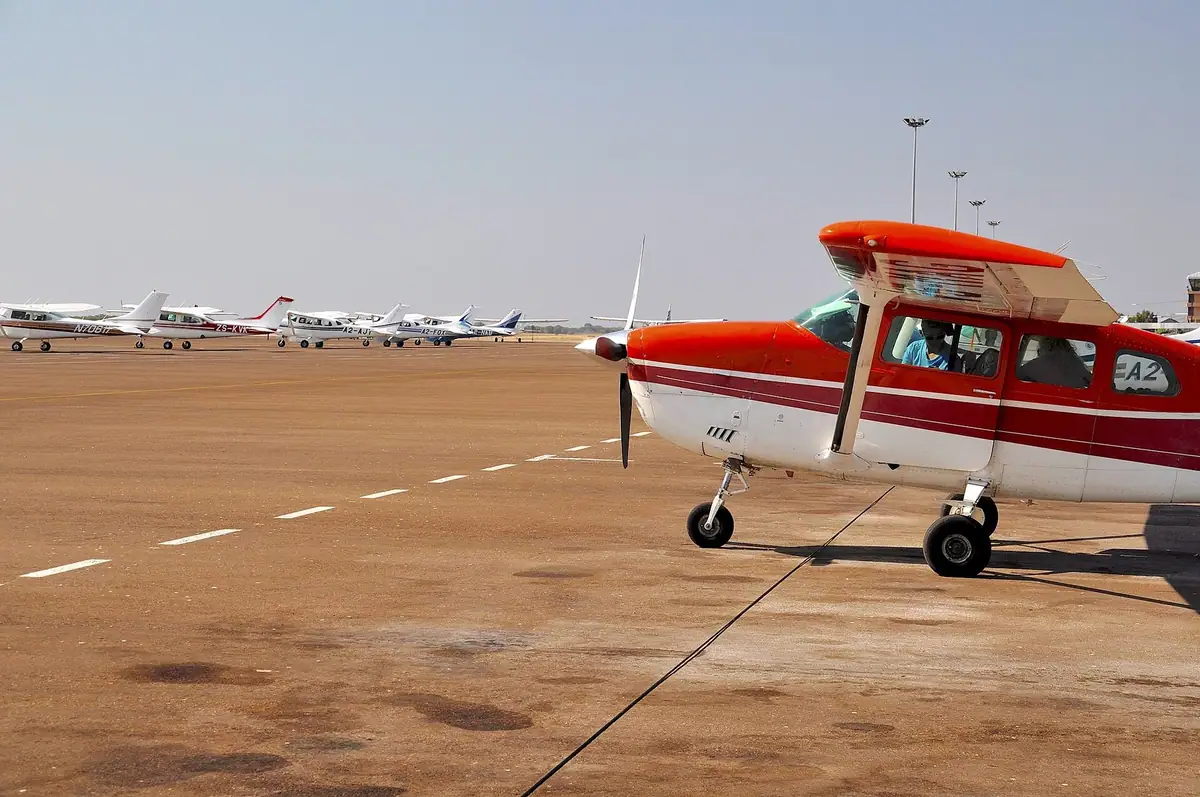
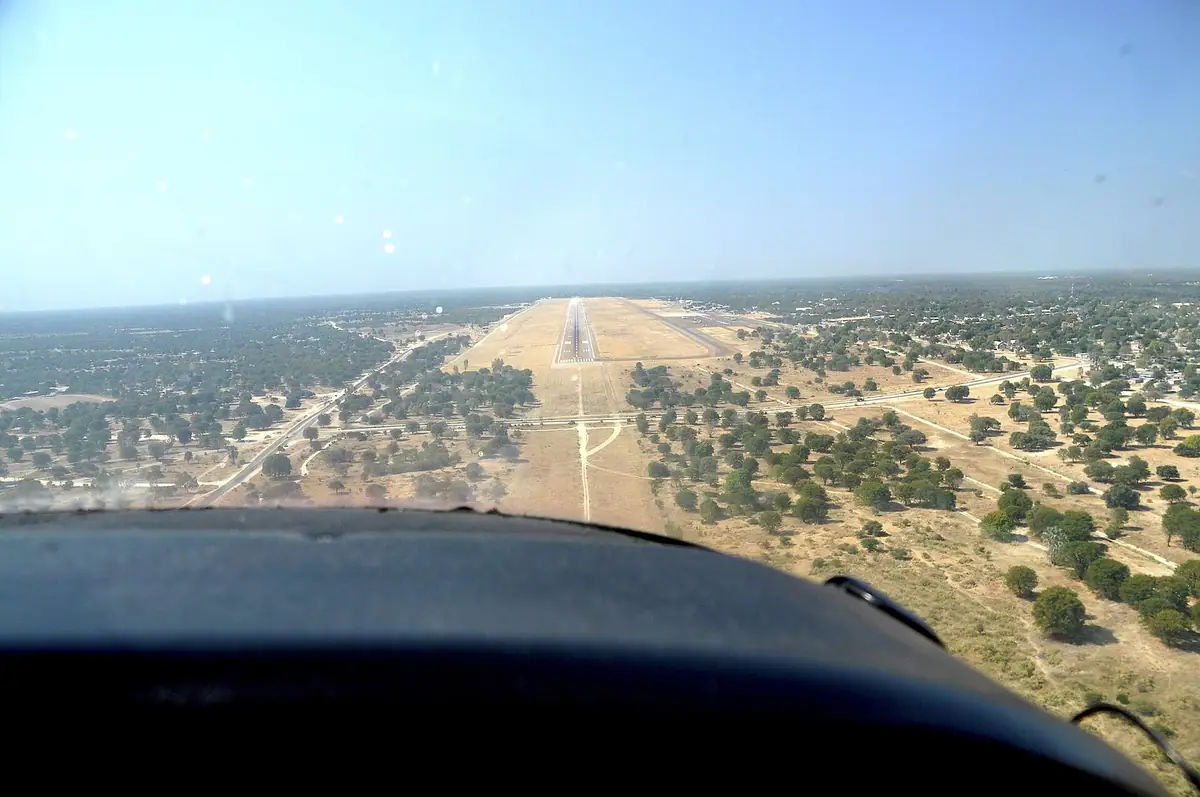
Light aircraft in Botswana are typically Cessna 206s and Caravans flying into short bush airstrips. The luggage goes into a narrow pod or a small hold, so the limits are physical, not just a matter of weight:
- About 20kg per person, including hand luggage and camera gear. A few routes and smaller aircraft are stricter, at 15kg; we tell you in writing which applies to your itinerary.
- A soft bag with no rigid frame. Most operators specify roughly 25cm high, 30cm wide and 62cm long. Hard suitcases genuinely will not fit, and wheels and frames are best avoided because they stop the bag folding into the space.
- Your own body weight matters on the smallest aircraft. If a passenger is over about 100kg, airlines ask for that in advance so they can balance the load, sometimes by booking an extra seat. It is routine and handled discreetly; just tell us.
If you are travelling on to Cape Town, the Victoria Falls or a beach afterwards and need more, we can arrange to store a second bag in Maun or Johannesburg and reunite you with it on the way out. If you would rather keep everything with you, you can buy an extra seat on the light aircraft for your luggage. Both are cheaper than they sound and cheaper than an argument at the airstrip.
What to wear on safari, and which colours to avoid.
Safari clothing is about blending in and staying comfortable in dust, sun and cold, not about looking like an expedition. The rules are short:
- Wear neutral, earthy colours: khaki, olive, sage, stone, tan and soft brown. They do not startle animals and they hide the dust.
- Avoid bright white on game drives and walks. It is conspicuous in the bush and will not stay white for long.
- Avoid dark blue and black in the northern Delta and Linyanti. Tsetse flies are attracted to them, and a tsetse bite is painful if not dangerous.
- Leave camouflage at home. It is reserved for the military in Zimbabwe and Zambia, and it is not worth the conversation at a border if your route touches the Victoria Falls.
- Bright colours are fine in camp, at dinner and in towns. On a walking safari, stick to muted tones.
Choose quick-drying fabrics over heavy cotton, long sleeves for sun and mosquitoes in the evening, and trousers that zip off to shorts if you like them. Dinner in even the most expensive camps is smart-casual at most: a clean shirt and a warm layer.
Packing for the season you are travelling in.
The same itinerary needs a different bag in July and in January. Pack for the season rather than for “Africa”.
May to August: the cold, dry winter
Days are clear, dry and warm, often 25–28°C by midday. Nights and early mornings are cold, with frost possible in the Kalahari and on the pans. Game drives leave at first light in open vehicles, and the wind chill makes it colder still. Bring a down or insulated jacket, a fleece, a warm hat, gloves and a scarf or buff. Camps provide blankets and hot water bottles on the vehicle; you will still be glad of the jacket. By ten o’clock you will be in a shirt.
September to October: the hot, dry build-up
October is the hottest month, with afternoons that can pass 40°C. Pack light, loose, breathable layers, a wide-brimmed hat and plenty of sun protection. A light fleece for early mornings is still worth carrying in September.
November to April: the green season
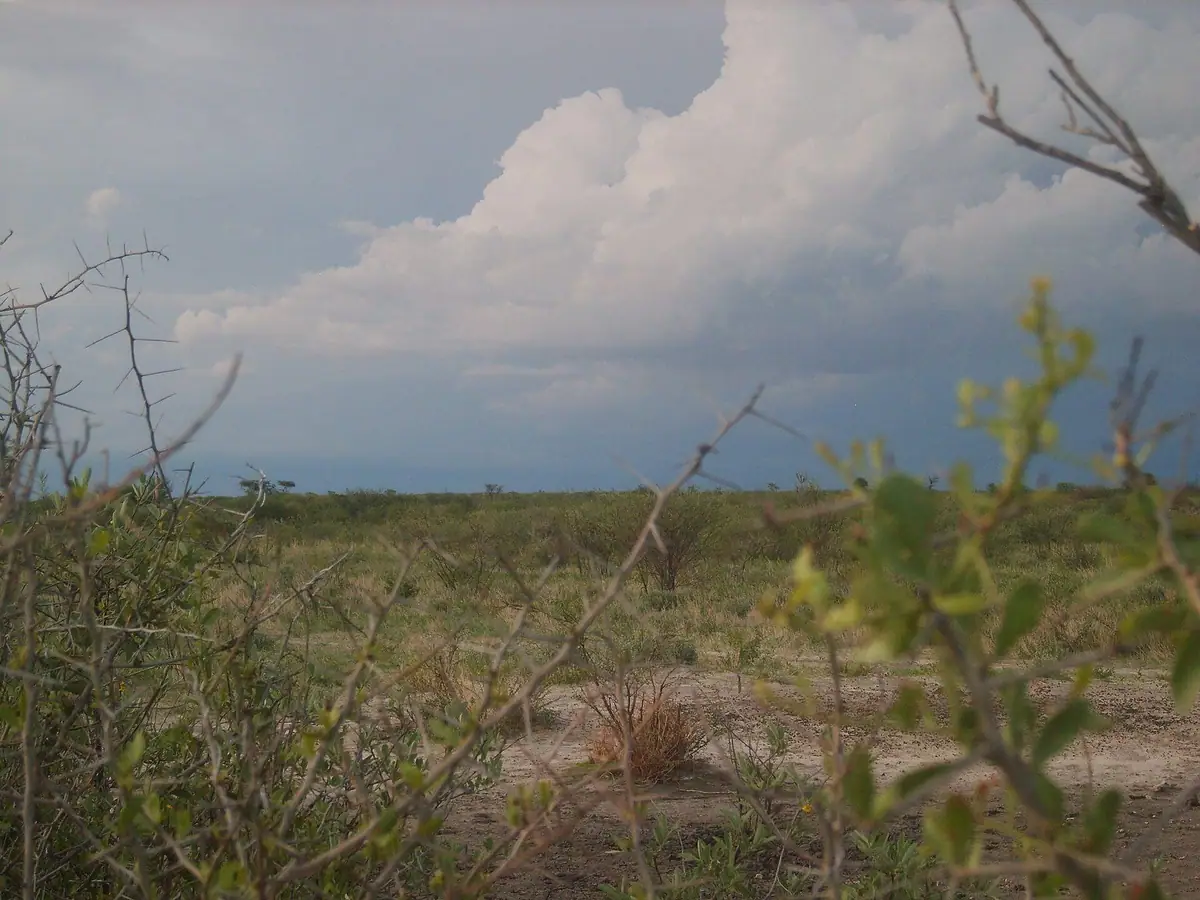
Warm to hot and humid, with afternoon thunderstorms that pass quickly. Add a lightweight, breathable waterproof jacket, quick-dry clothing and a dry bag for your camera. Mosquitoes are most active now, so long sleeves and trousers for the evenings matter more. See when to go for what each season gives you in return.
Footwear, hats and the small things that matter.
One pair of comfortable closed shoes and one pair of sandals or slip-ons for camp covers most safaris. Light trail shoes or broken-in walking boots are right for a walking safari or a bush walk on a mokoro island; heavy mountain boots are not needed. Do not bring brand-new boots.
A wide-brimmed hat that will stay on in a moving vehicle (a chin strap helps), polarised sunglasses and a high-factor sunscreen are not optional: the sun is strong at this altitude, even in winter. A buff or light scarf earns its place against dust on the pans and cold in the morning.
Binoculars, cameras and electronics.
Binoculars are the single most useful thing you can bring. Guides carry a pair, but sharing one pair across a vehicle means missing things. An 8x42 or 10x42 is the sweet spot for safari. One pair each is better than one between two.
For photography, a zoom in the 100–400mm range (or a bridge camera with a long lens) covers most wildlife, with a wider lens or your phone for landscapes and camp. Bring more memory cards and batteries than you think, a dust blower and a soft cloth, and a bean bag or a small cushion to rest a long lens on the vehicle. Most camps charge cameras and phones in the main area or your tent, sometimes from solar power; a power bank covers the gaps. Botswana uses 230V with type D, G and M sockets, so pack a universal adapter. See our practical information guide for power, Wi-Fi and signal in camp.
Drones are a different matter. Flying one over national parks, reserves or tourist facilities is prohibited without permission from the Civil Aviation Authority of Botswana, and almost every camp bans them. Leave the drone at home.
The Botswana safari packing checklist.
Clothing
- 3–4 shirts or tops in neutral colours, at least two with long sleeves
- 2–3 pairs of lightweight trousers or zip-offs, and a pair of shorts
- A warm fleece and a down or insulated jacket (May to September)
- Warm hat, gloves and a scarf or buff (May to August)
- Light waterproof jacket (November to April)
- Swimwear, for camps with a plunge pool
- Comfortable closed shoes, and sandals for camp
- Sleepwear, underwear and socks (and travel wash: see below)
- Wide-brimmed hat and polarised sunglasses
Kit and documents
- Passport, valid six months beyond travel, with blank pages
- Printed travel documents, insurance policy and emergency numbers
- Binoculars, one pair per person if you can
- Camera, spare batteries, memory cards and a power bank
- Universal plug adapter (types D, G and M)
- Head torch or small torch
- Malaria tablets and any personal medication, in hand luggage
- High-factor sunscreen, lip balm and insect repellent
- A small soft day bag and a dry bag for the camera
- Some small US dollar notes for incidentals
On laundry: most camps wash clothes daily and include it in the rate, but many do not wash underwear, for cultural reasons, and provide washing powder in the tent instead. A small bottle of travel wash solves it.
What to leave at home.
- Hard suitcases and wheeled bags with rigid frames
- Drones, unless you have written permission from the aviation authority and the camp
- Camouflage clothing
- Formal wear: nobody dresses for dinner in the bush
- Expensive jewellery and anything you would hate to lose
- A hairdryer, unless the camp confirms it has the power for one
- More than about five days of clothes, given the laundry