Malaria in Botswana: where and when.
The risk follows water and rain:
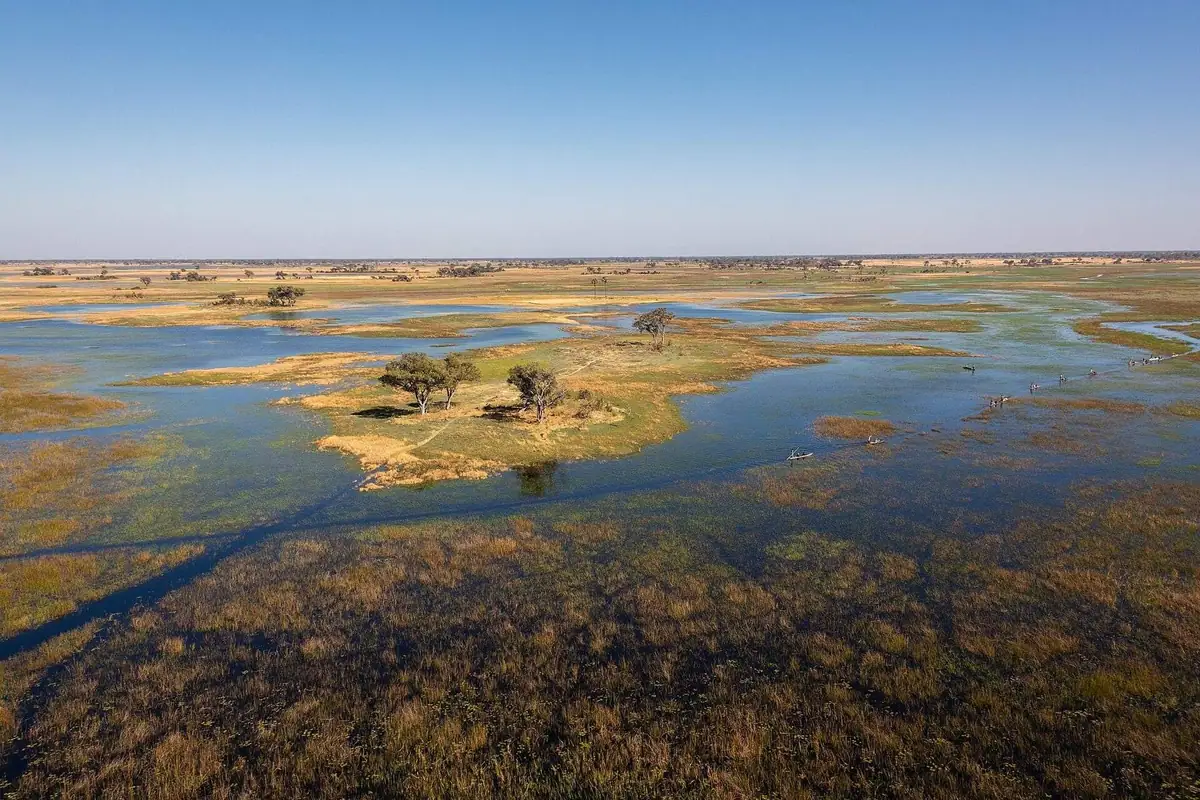
- Northern Botswana, meaning the Okavango Delta, Chobe, Linyanti, Selinda and Savuti, is a malaria area. Antimalarial tablets are generally recommended for visits here.
- The risk is highest from November to April, during and after the rains, and lowest in the cold, dry months from June to August, when mosquitoes are few. Lower is not zero.
- The Kalahari, the Makgadikgadi and the south are much lower risk, and the risk there is mainly seasonal. Your doctor may advise differently for a trip that stays only in these areas.
Several antimalarials are available, with different side effects, costs and dosing schedules. Which suits you depends on your health, other medication and the length of your trip, which is exactly why it is a conversation for a doctor rather than a website. Start and finish the course exactly as prescribed: most require you to keep taking tablets after you return home.
Avoiding mosquito bites.
Tablets reduce the risk; avoiding bites reduces it further. Camps help with nets, screened tents, repellent and insecticide, and you can do the rest:
- Cover up with long sleeves and trousers from dusk, when the malaria mosquito is active.
- Use a repellent containing DEET or picaridin on exposed skin, reapplied as directed.
- Sleep under the net and keep tent zips closed.
- Any fever, chills or flu-like illness within a few months of returning home needs a malaria test, and you should tell the doctor where you have been.
Travelling malaria-free, with children or in pregnancy.
Some guests prefer to avoid malaria altogether: families with very young children, travellers who are pregnant or planning to be, and people who cannot take antimalarials. There are good ways to do this. The dry winter months carry the lowest risk in the north, and the Central Kalahari and the pans are much lower risk than the Delta. Malaria in pregnancy is particularly dangerous, and medical advice is usually to avoid malaria areas entirely while pregnant.
Tell us early if malaria is a concern, and we will design around it rather than leave you to worry about it.
Vaccinations for Botswana.
No vaccination is compulsory for entry from Europe, North America or Australasia. Travel clinics commonly recommend:
- Routine vaccinations brought up to date, including tetanus, diphtheria and polio.
- Hepatitis A, and often typhoid.
- Hepatitis B and rabies for some travellers, depending on activities and length of stay.
Yellow fever: there is no yellow fever in Botswana, but a certificate is required if you arrive from, or have transited through, a country with a risk of yellow fever, such as Kenya or Uganda. See our visa and entry guide.
Water, food and the sun.
Camps provide safe drinking water, filtered or bottled, and many now use refillable bottles to cut plastic. Tap water in the main towns is generally treated, but most visitors stick to bottled or filtered water. Food in camps is prepared with care, and dietary requirements, allergies and intolerances are handled well if we pass them on in advance.
The sun is the most common health problem we see. Botswana sits at about 1,000 metres, the air is dry and the light is strong even in winter. Wear a hat, use high-factor sunscreen, and drink more water than you feel you need, particularly in October.
Medical care and emergencies.
Camps have trained first-aiders and first-aid kits, and are in radio contact with air-rescue services that can reach most of the north quickly by day. Maun and Kasane have clinics and private medical practices; Gaborone has private hospitals; serious cases are usually transferred to Johannesburg. Every journey we sell includes emergency evacuation cover from the bush, and comprehensive travel insurance covers what happens after that.
Bring enough of any prescription medicine for the whole trip plus a few days, in its original packaging, in your hand luggage, with a copy of the prescription. Pharmacies outside the main towns are rare.