One journey, one learner.
Four things we can actually account for, rather than a page of language about sustainability.
Things that can be counted.
Every operator in this country has a page like this one. We have tried to keep ours to things you could check if you wanted to, on the grounds that a claim nobody can verify is decoration.
One Journey, One Learner
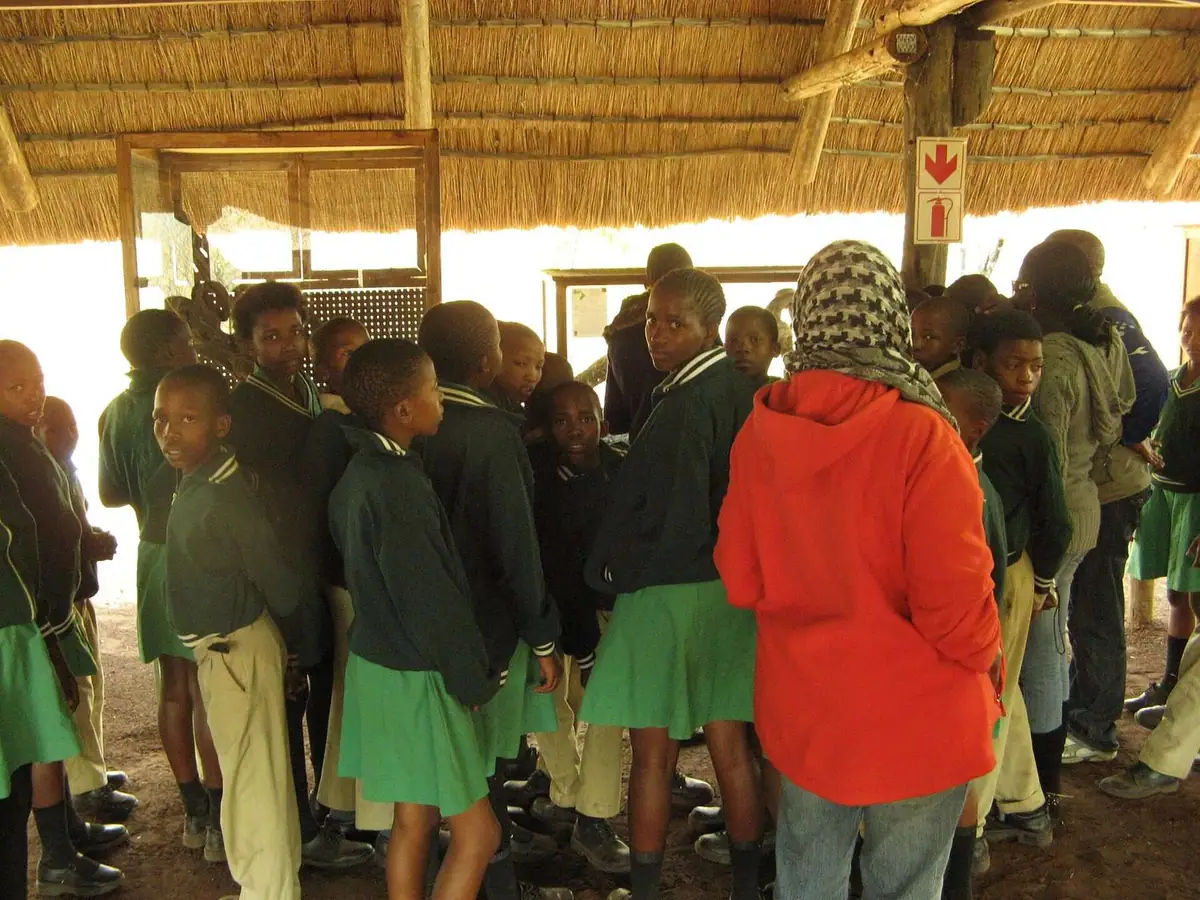
For each safari sold we cover a year of secondary schooling for a Motswana child from one of the communities bordering the areas our guests travel through. It is tied to the individual booking rather than to a general fund, so we can tell you which year yours paid for, and we write once a year to do that.
Batswana Guides, Batswana Futures
We recruit and train exclusively from within Botswana, and we fund guide certification for candidates from Khwai, Sankuyo, Mababe and Kalahari communities who could not otherwise afford it. Guiding is the best-paid way into Botswana’s tourism economy, and certification costs more than most families in those villages can raise. Closing that gap is cheap for us and changes a career.
Conservation Contribution
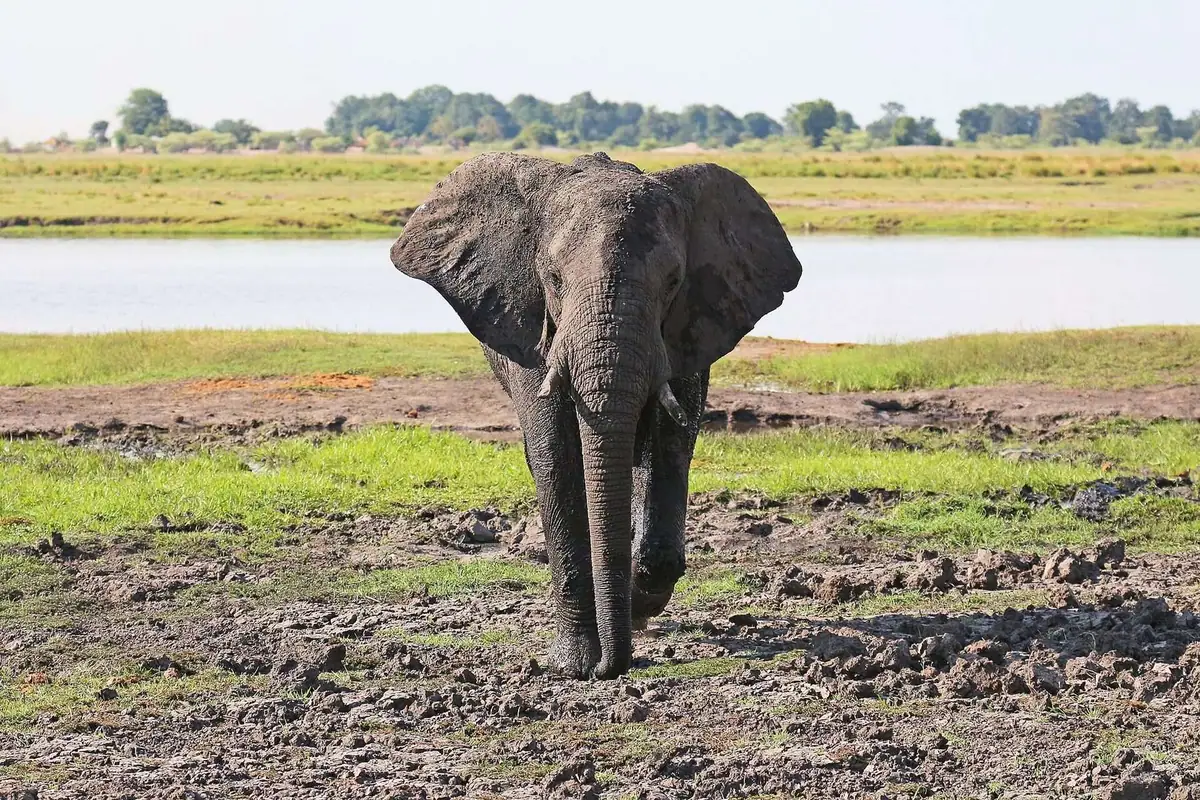
A per-guest contribution goes to anti-poaching operations and to human–wildlife conflict mitigation in the communities adjoining Chobe and the Delta, where elephant crop-raiding is a genuine livelihood issue for farming families.
Low Impact by Design
We favour camps that are solar-powered, water-recycling, plastic-free and community-partnered. We keep group sizes small and we offset the carbon of all internal flights. Botswana’s high-value, low-impact model only works if operators actually honour it.
High value, low impact, and what that costs.
Botswana made a deliberate choice decades ago: rather than maximise visitor numbers, it would cap them. Strict concession limits, small camp footprints, and far fewer beds than the wilderness could physically support.
The result is the most uncrowded premium safari destination in Africa — and higher prices, because the cost of protecting that much land is spread across fewer guests. When you pay more per night here than you would elsewhere, that is what you are paying for.
The model only holds if operators keep to it rather than quietly working around it. We own no camps, so there is no occupancy target pulling us the other way.
Hold us to it.
Any operator can publish a promise. These are the questions worth asking us, and our honest answers to them.
How do I know the school year is actually funded?
Because it is attached to your booking rather than to a general fund. Each journey funds a named learner’s year, and we report annually to the guests who paid for it. Guests who ask to visit are welcome to, and some build a morning into the itinerary.
Why fund guide training specifically?
Because guiding is the highest-paid entry point into Botswana’s tourism economy, and certification is expensive enough to exclude exactly the people who grew up in these areas. Funding it for candidates from Khwai, Sankuyo, Mababe and the Kalahari communities is, we think, about the most useful thing an operator here can do.
Where does the conservation contribution go?
To anti-poaching operations and to human–wildlife conflict mitigation in the communities adjoining Chobe and the Delta. The second matters more than visitors realise: elephant crop-raiding is a genuine livelihood problem for farming families, and conservation that ignores it does not hold.
Is offsetting internal flights worth anything?
It is an imperfect instrument and we will not pretend otherwise. It does not undo the emissions and the market has a poor record. We do it anyway because it is better than not doing it, and because the alternative on a Botswana itinerary is often two days of driving. The more useful lever is fewer, longer stays, which we recommend for other reasons too.
How do you judge a camp's environmental claims?
By having slept there. Our notes record whether the solar array actually runs the camp or just the reading lights, whether grey water is actually recycled, and whether the plastic-free policy survives contact with the bar. We prioritise camps with real infrastructure over camps with good language about it.
Is visiting San communities exploitative?
It can be, and often is. The version that is not involves going back to the same communities repeatedly, paying them directly at an agreed rate rather than through a middleman, going in small numbers, and accepting that the day runs on their terms rather than your itinerary’s. That is how we run it. If a community would rather not host that week, we do not go.
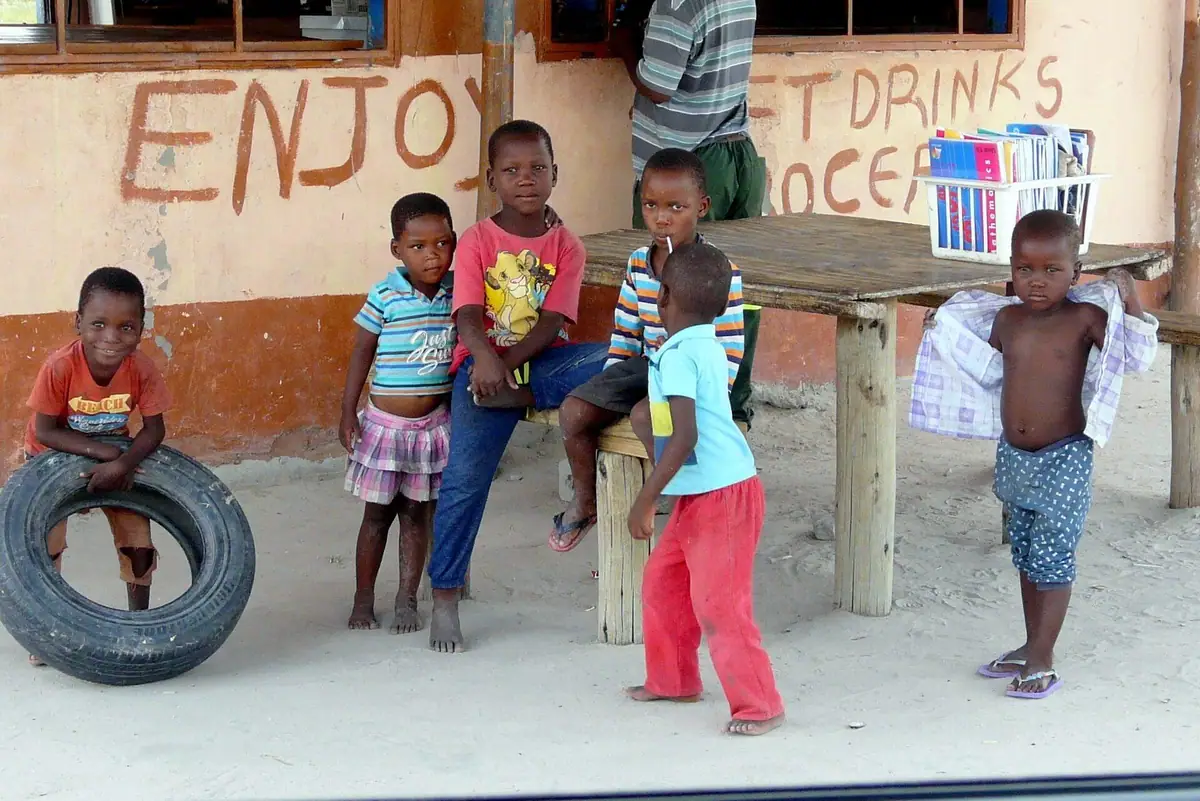
Guiding is the best-paid way into Botswana’s tourism economy, and certification costs more than most families in these villages can raise. That gap is the one worth closing.Why we fund guide training
Tell us what you want this journey to feel like.
Not just what you want to see. Send a few lines about who is travelling and roughly when, and we will come back to you with something written for you rather than pulled off a shelf.