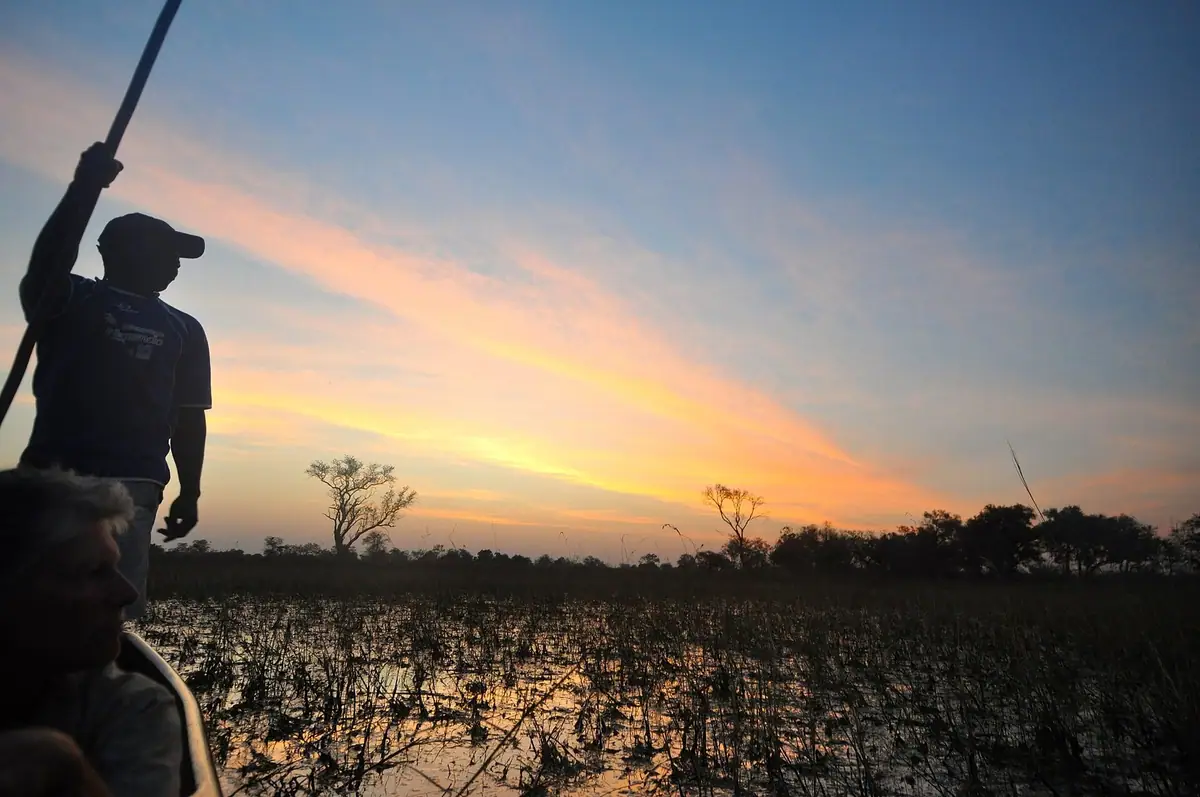
Okavango Delta safaris: a river that dies in a desert, and makes a paradise doing it.
The largest inland delta on earth, a UNESCO World Heritage Site, and the only place in Africa where a safari is conducted by dugout canoe.
The water arrives months after the rain, and from another country.
The Delta became the 1000th site inscribed on the UNESCO World Heritage List, which is a useful shorthand for how unusual it is: a river that never reaches the sea.
Rain falls on the Angolan highlands between December and March. It gathers into the Okavango River, runs south-east for a thousand kilometres, crosses the Caprivi Strip and finally spreads out across the flat Kalahari sand — where it evaporates and soaks away rather than reaching any sea.
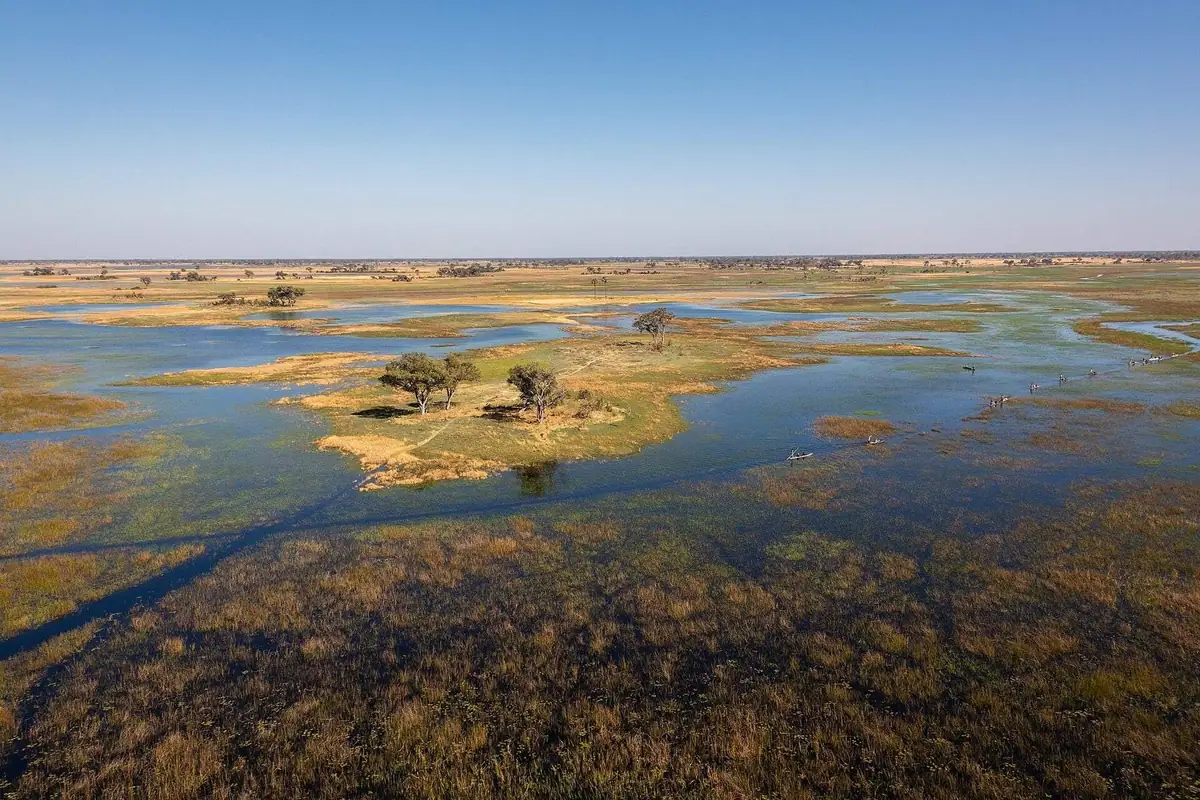
That journey takes months. The flood therefore peaks in Botswana between June and September, in the middle of the dry winter, at exactly the moment when every other water source in the region has gone. The result is 15,000 square kilometres of channels and floodplain, surrounded by desert, with the game pressed up against it.
It is the fact that governs everything else about planning a trip here, and the reason the best months are not the ones you would guess.
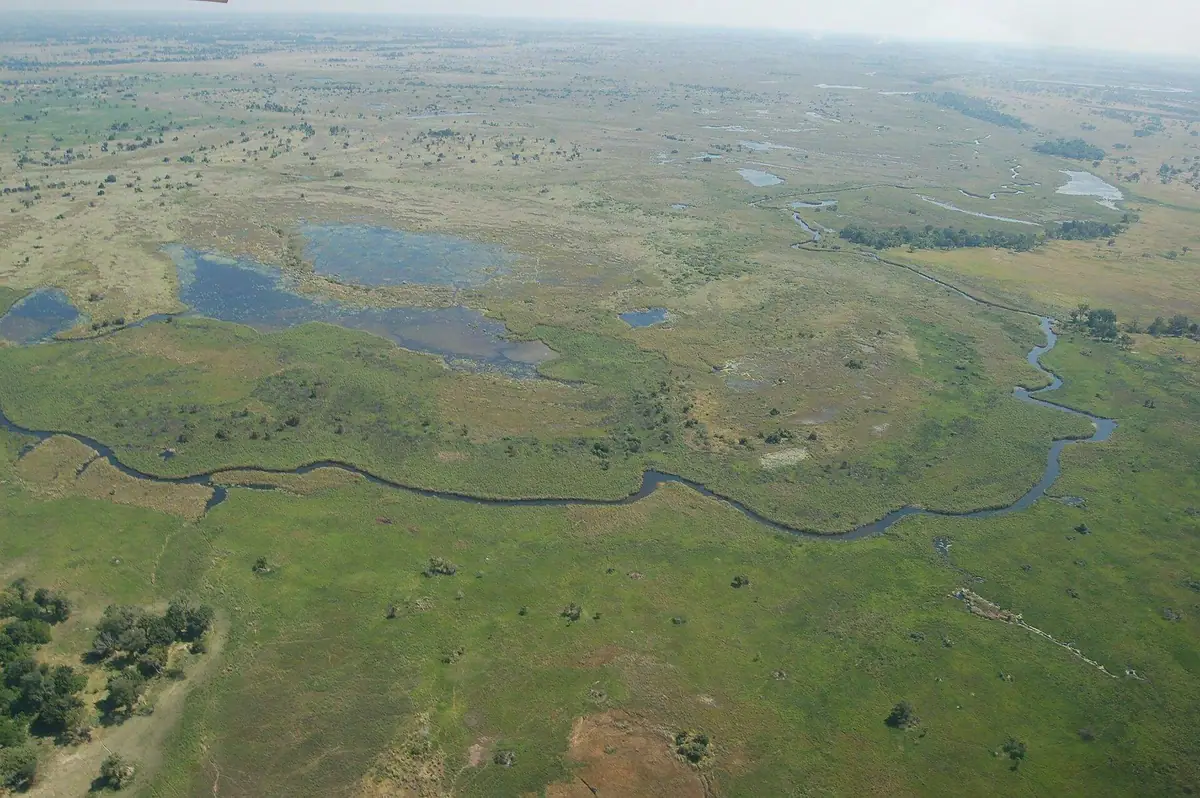
Water, floodplain, or both.
The Delta is not uniform. Where you stay determines what your days actually look like, and it is the decision we spend most time on with guests.
Permanent water: the west and panhandle
Channels that hold water all year. Mokoro, motorboat, island walks and catch-and-release fishing. Sitatunga, red lechwe, hippo and exceptional birding. Few big cats.
Seasonal floodplain: the east and Moremi
Land that floods and drains through the year. Vehicle-based game viewing, with lion, leopard, wild dog and elephant. The predator country, centred on Moremi Game Reserve.
Khwai and the fringes
Community land on the Delta’s north-eastern edge. Wildlife-rich, night drives permitted, and good value. More in our guide to Khwai.
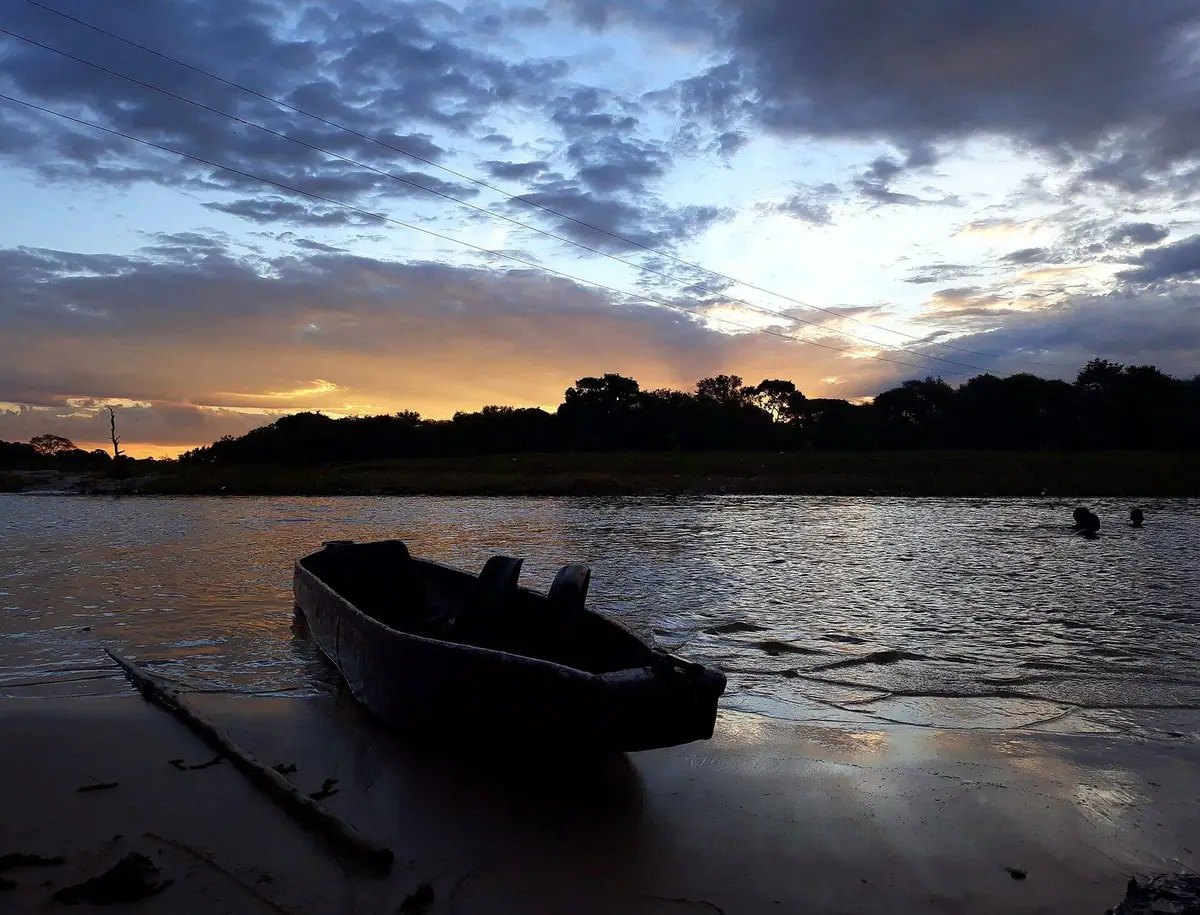
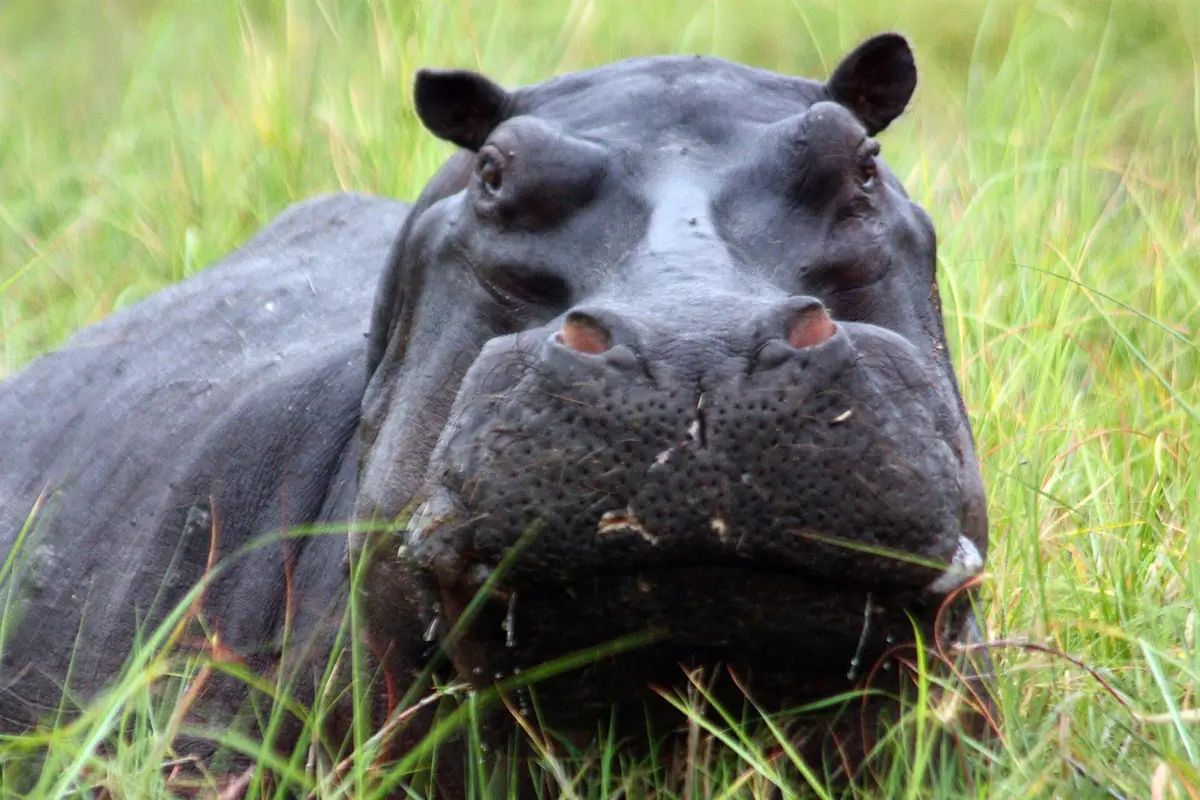
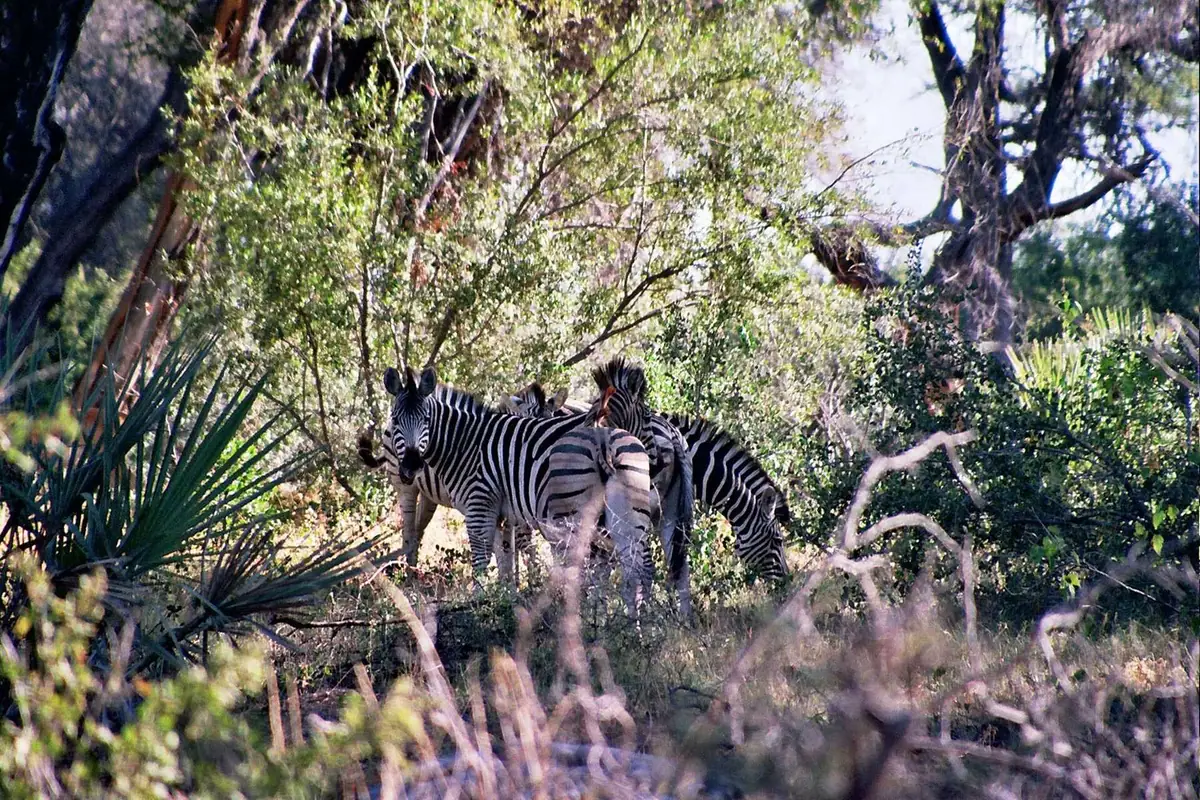
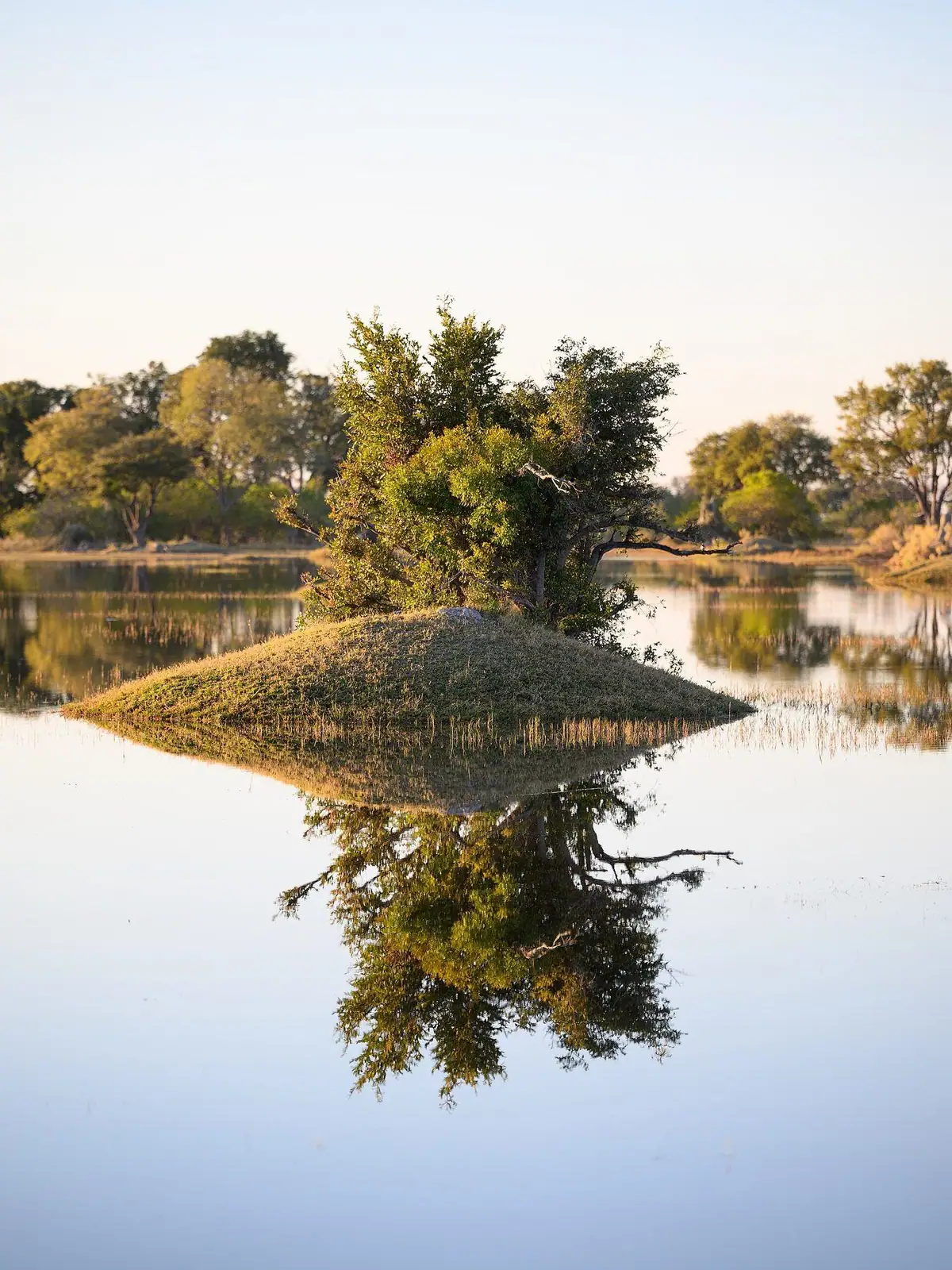
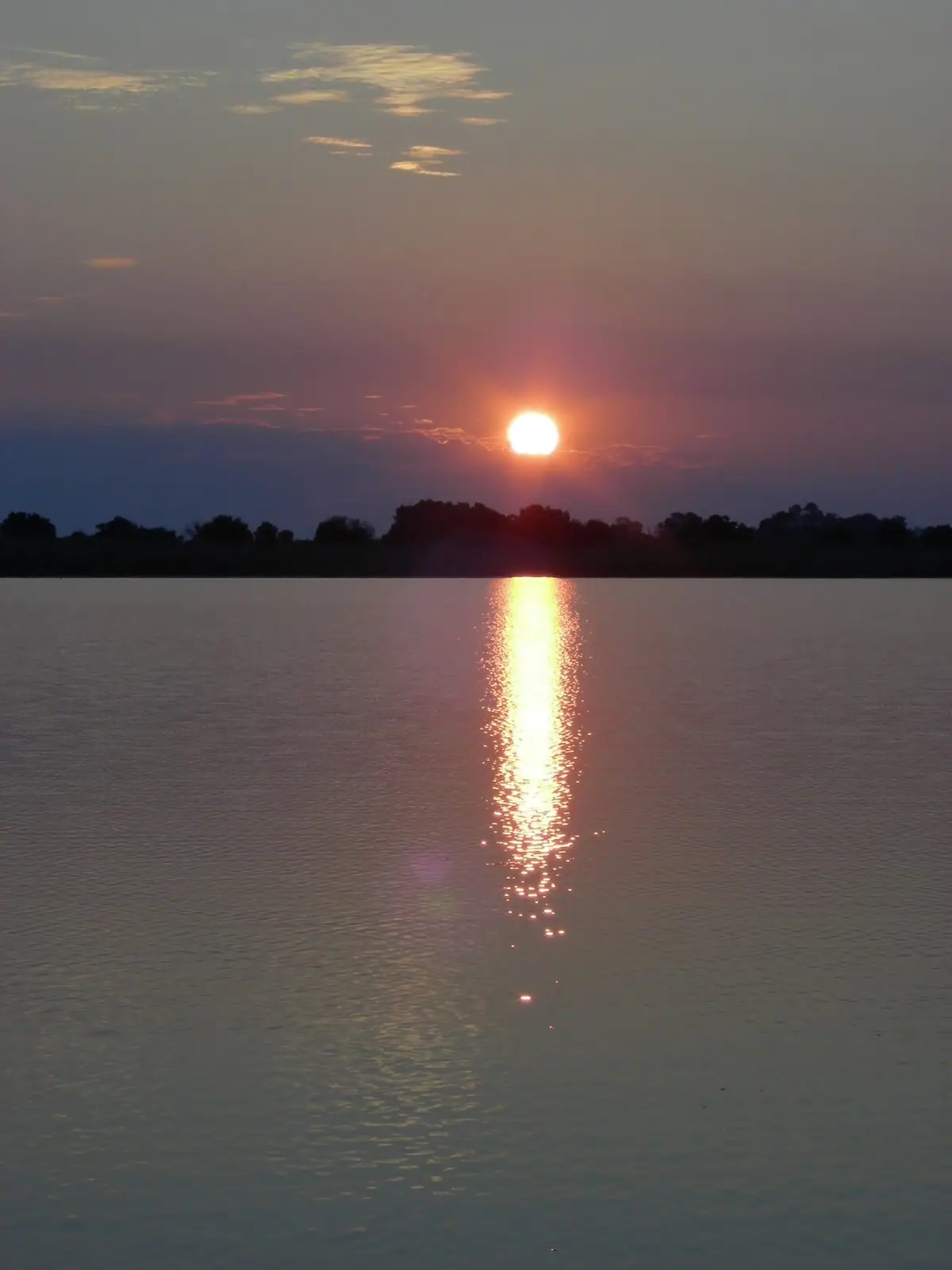
The Delta, place by place.
Each has its own guide: when to go, how you get there, and what guests ask us.
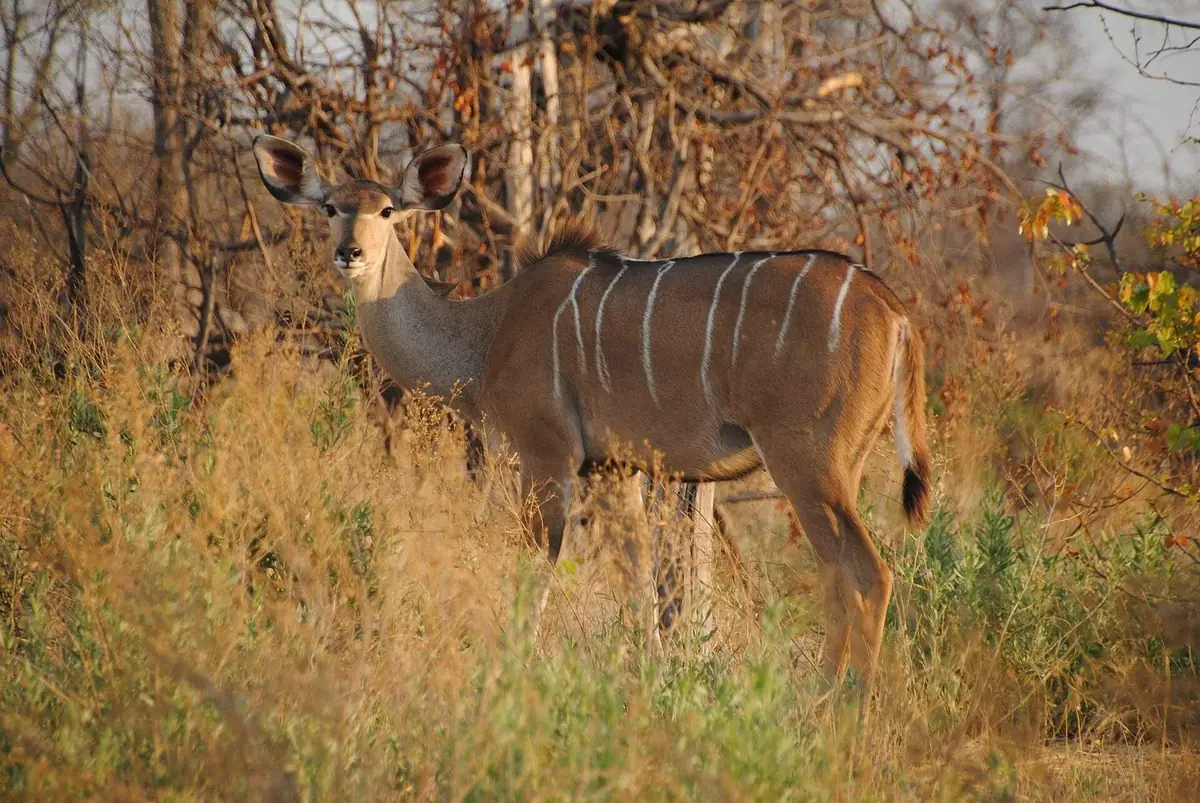
Moremi Game Reserve
The Delta's protected heart, reachable by road
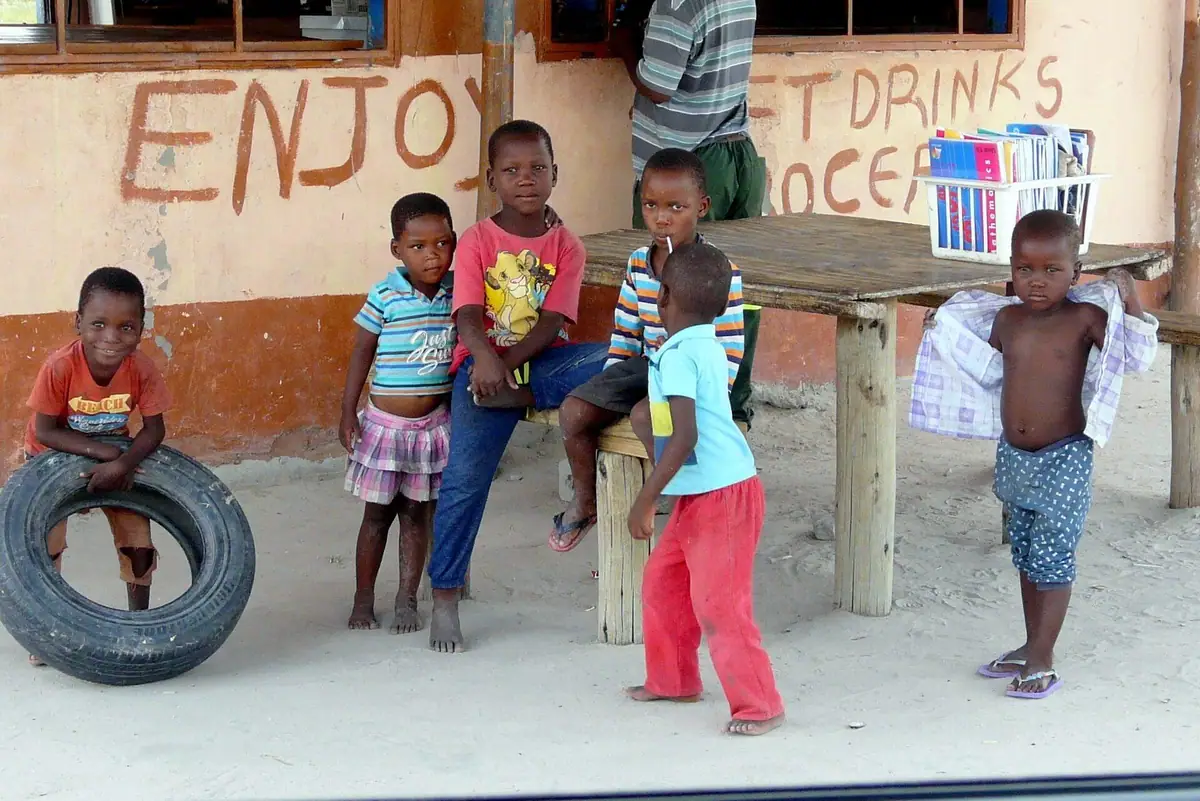
Khwai Community Concession
Community land with night drives and walking
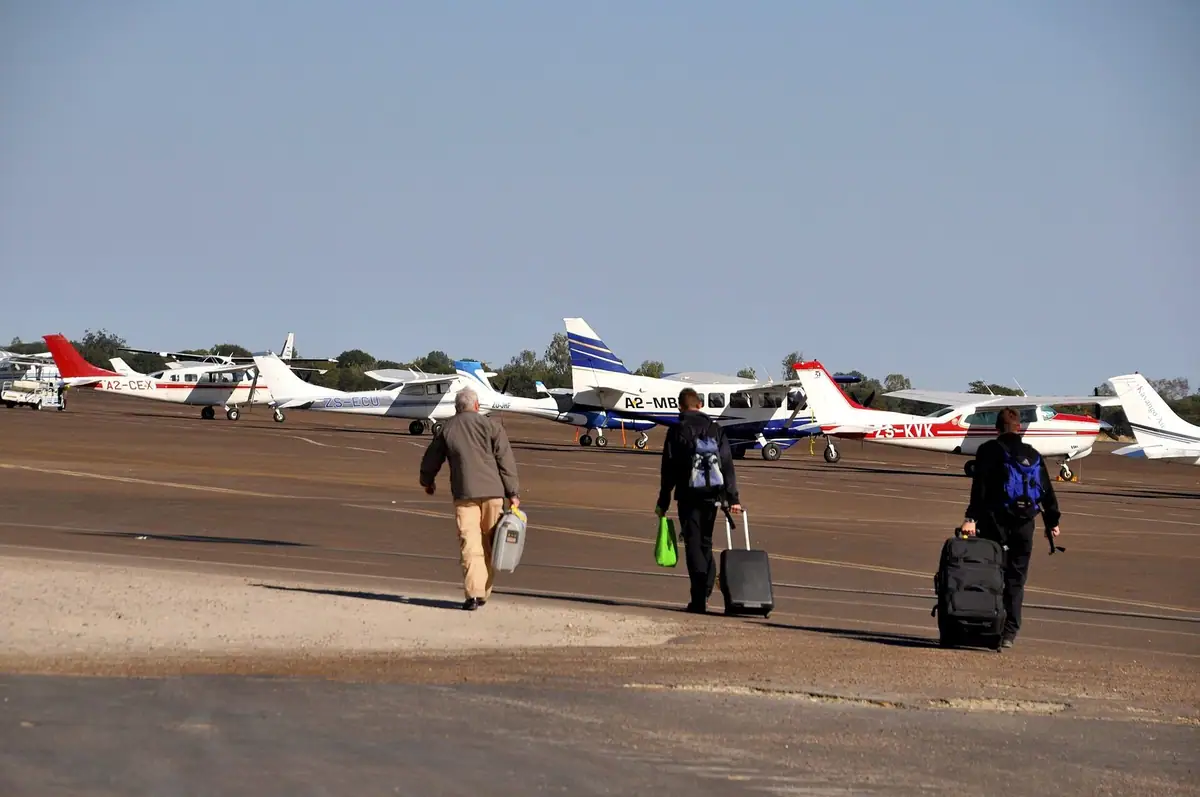
Maun
The Delta gateway, and its light-aircraft hub
Further north-west, past the Panhandle, are the Tsodilo Hills and their rock paintings.
What guests ask us before they book.
Why does the Delta flood in the dry season?
Because the water is not local. The rain falls in the Angolan highlands, a thousand kilometres north, and takes months to travel down the Okavango River and spread across the sand. So the flood peaks between June and September — in the middle of Botswana’s dry winter, when the surrounding country is at its driest. That mismatch is exactly what concentrates the game.
What is the difference between a water camp and a land camp?
A water camp sits on permanent channels: the safari is by mokoro and motorboat, the birding is exceptional, and you see sitatunga, red lechwe and hippo rather than big cats. A land camp sits on a seasonal floodplain: the safari is by vehicle, and you get lion, leopard, wild dog and elephant. Most good itineraries include one of each, which is why Delta & Desert is our most requested trip.
What is a mokoro actually like?
Silent, low and surprisingly stable. It is a shallow dugout — traditionally carved, now usually fibreglass to spare the hardwoods — poled from the stern by a Motswana poler who grew up on these channels. You sit at water level moving at walking pace, so what you notice is reed frogs, dragonflies, jacanas and the smell of crushed wild sage. It is not a game-viewing platform. It is the best hour of many people’s trip.
Is Moremi part of the Delta?
Yes — Moremi Game Reserve protects roughly the eastern third of it, and it is the only part of the Delta you can reach by road from Maun. That makes it the backbone of every mobile camping journey, and it happens to have some of the best predator viewing in Africa. See our guide to Moremi Game Reserve.
How many nights should we spend in the Delta?
Three at an absolute minimum, four or five to do it properly, and ideally split across two camps with different characters. One night anywhere in Botswana is a wasted flight; the single most common correction we make to guests’ draft itineraries is removing a stop.
Are there mosquitoes and is malaria a risk?
The Delta is a malaria area and prophylaxis is recommended, particularly in the wet months from November to April. Camps provide nets and repellent, and in the dry winter months mosquito numbers are very low. Speak to your doctor; we cover it in the pre-departure briefing.
Four ways in.
Keep reading
- Moremi Game Reserve — the Delta’s protected eastern heart, and its predators
- Chobe National Park — the usual second half of a Delta trip, and the opposite landscape
- When to go to Botswana — the flood peaks in the dry season, which changes everything
- What a Delta safari costs — water camps carry a premium; here is the range
- The Kalahari and the salt pans — the desert half of Delta & Desert, our most-requested route
Tell us what you want this journey to feel like.
Not just what you want to see. Send a few lines about who is travelling and roughly when, and we will come back to you with something written for you rather than pulled off a shelf.