Crime and personal safety.
Serious crime against visitors is uncommon. As in any country, there is petty crime, mainly in Gaborone, Francistown and the larger towns: bag snatching, pickpocketing and theft from vehicles. Simple precautions cover it:
- Do not leave bags or valuables visible in a parked car.
- Use hotel and tent safes for passports, cash and spare cards.
- Avoid walking alone in towns after dark; take a taxi recommended by your hotel.
- Keep copies of your passport and travel documents separately from the originals, and a photo of them on your phone.
Check your own government’s travel advice before you go. At the time of writing, the UK, US and Australian governments advise normal precautions for Botswana. In an emergency, dial 999 for police, 997 for an ambulance and 998 for the fire service, though on safari your first call is to the camp or our duty desk.
Unfenced camps: the rules that keep you safe.
Animals move freely through most safari camps in Botswana, which is part of the magic. Every camp briefs you on arrival, and the rules are always much the same:
- After dark, you are always escorted between your tent and the main area. Use the radio, whistle or air horn in your tent to call an escort, and never walk alone at night.
- Stay in your tent if an animal is close. A tent with the zips closed is respected by animals as a solid object.
- Keep children supervised at all times, and check each camp’s minimum age.
- Do not keep food in your tent, especially fruit, which attracts elephants and baboons.
- Do not swim in rivers or the Delta. Crocodiles and hippos are there even when you cannot see them. Use the camp pool.
On game drives, walks and in a mokoro.
Animals in Botswana’s reserves are used to safari vehicles and see them as a single, large, uninteresting object. Your safety depends on keeping it that way:
- Stay seated and keep arms and cameras inside the vehicle’s outline at sightings. Do not stand up unless the guide says it is fine.
- Speak quietly and never call out to animals or try to attract their attention.
- Never get out of the vehicle unless your guide invites you to.
- On a guided walk, walk in single file, stay close, do exactly what the guide says and never run.
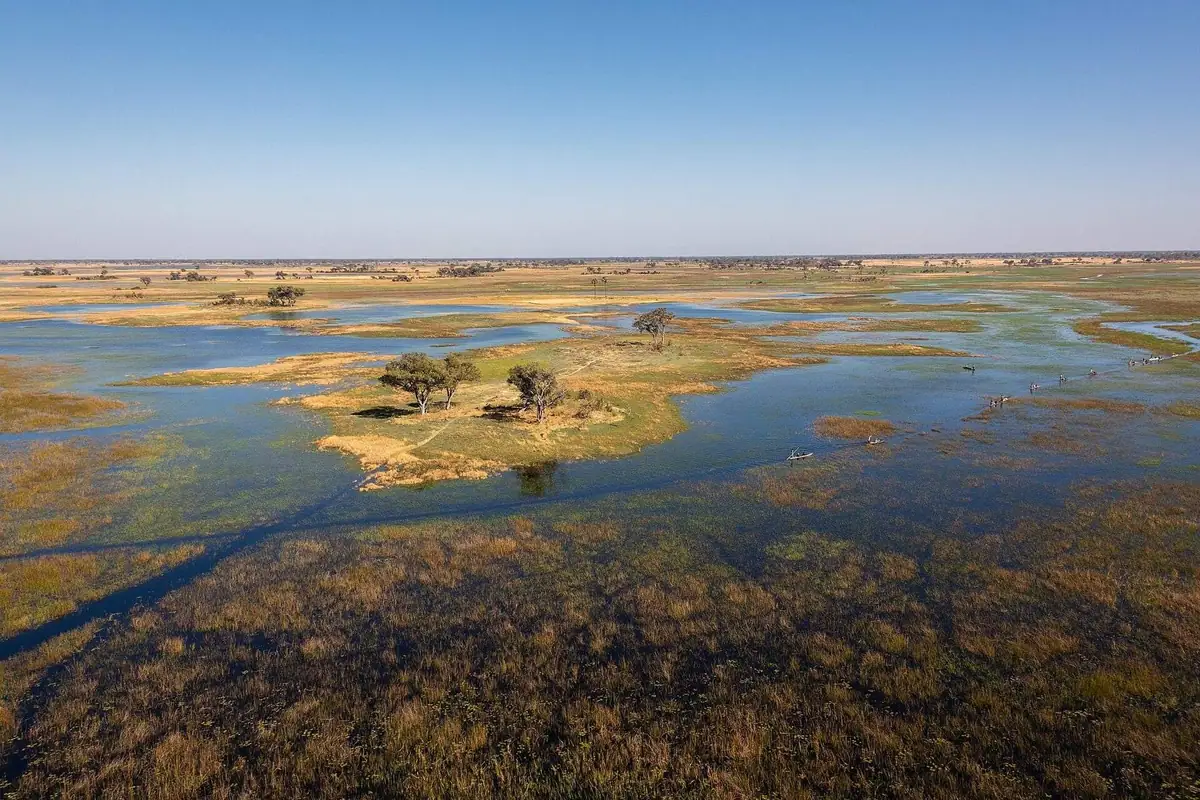
- In a mokoro, sit still and low. Polers know where hippos are and keep to shallow channels away from them.
Guiding is a licensed profession in Botswana, and walking guides hold additional qualifications. In decades of safari tourism, serious incidents involving guests who follow these rules have been extremely rare.
Solo, women and LGBTQ+ travellers.
Botswana is a comfortable country for solo travellers and for women travelling alone or together. Camps are small and sociable, and a guide and camp team look after you from the moment you land. Our themed journeys include safaris for women travelling together.
For LGBTQ+ travellers: Botswana’s High Court decriminalised same-sex relationships in 2019, a decision upheld by the Court of Appeal in 2021. Attitudes in rural areas can be conservative, as in much of the region, and public displays of affection are uncommon for any couple. Safari camps are welcoming, and we are happy to talk through any concerns privately.
Road safety and self-driving.
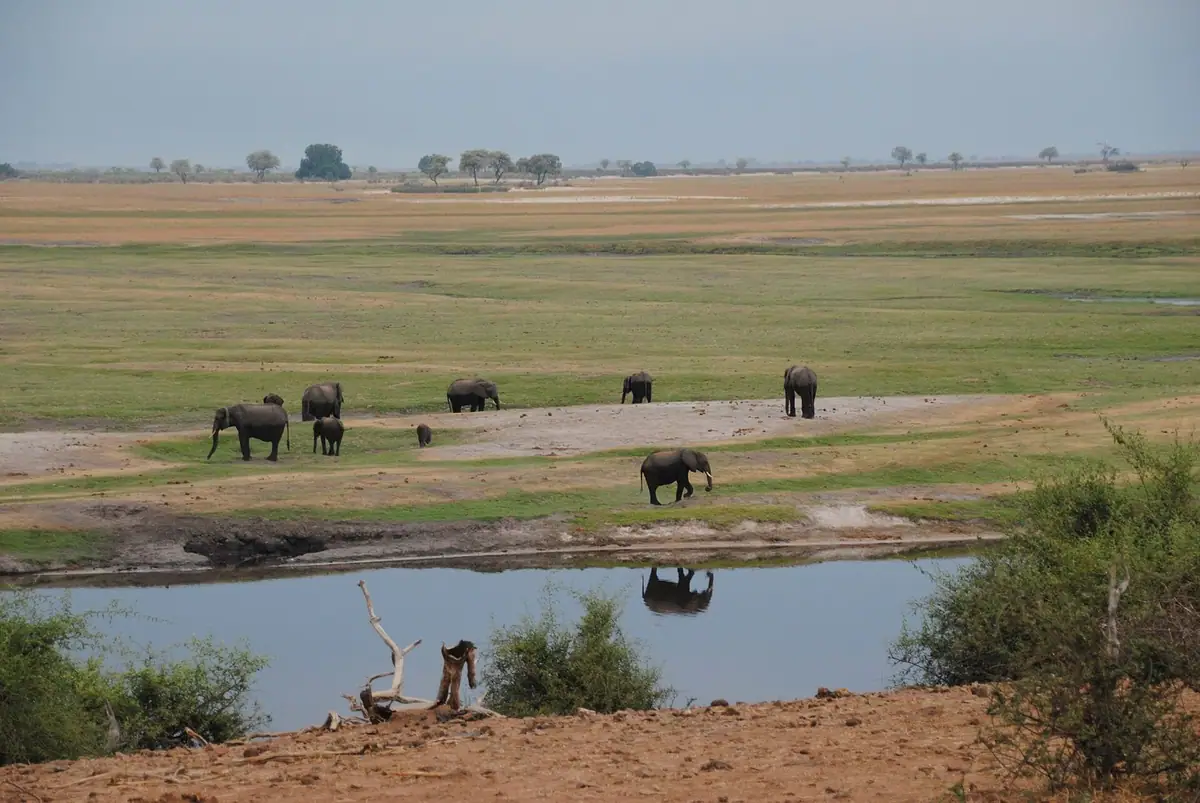
Driving is the main risk most visitors underestimate. Roads between towns are generally good tar, but cattle, donkeys, goats and elephants wander onto them, especially at night, and distances are long. Avoid driving after dark outside towns. In the parks, deep sand and water crossings need proper 4x4 experience, and help can be many hours away.
On our journeys, all driving in the bush is done by professional guides, and road transfers by experienced drivers.